
Loudest Animal on Earth: Which Animal Makes the Loudest Sound?
If you think about loudest animals the first thing that comes to mind might be a roaring lion, trumpeting elephant or a howling wolf. However, some of the loudest animal noises come from animal’s underwater.
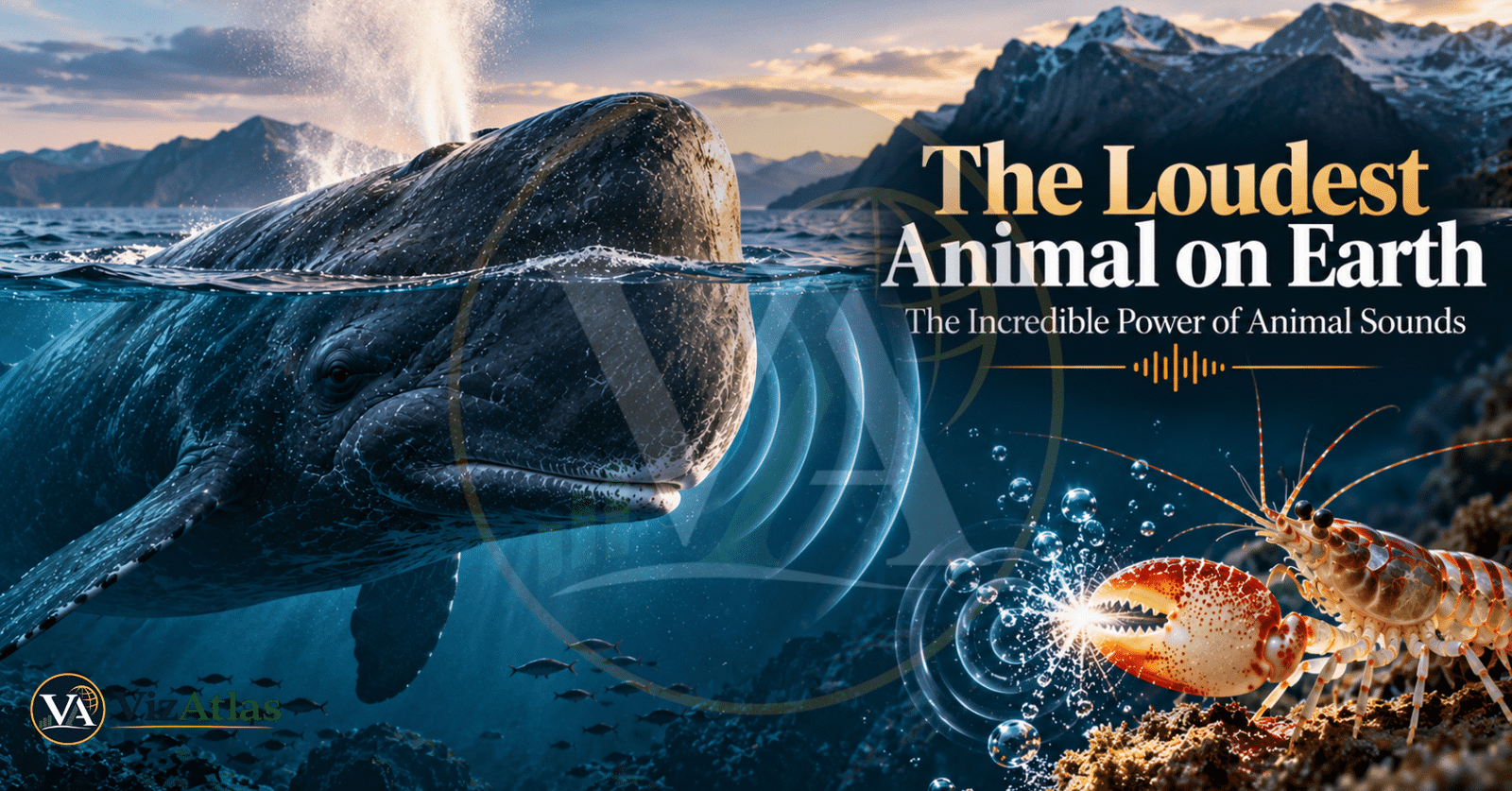
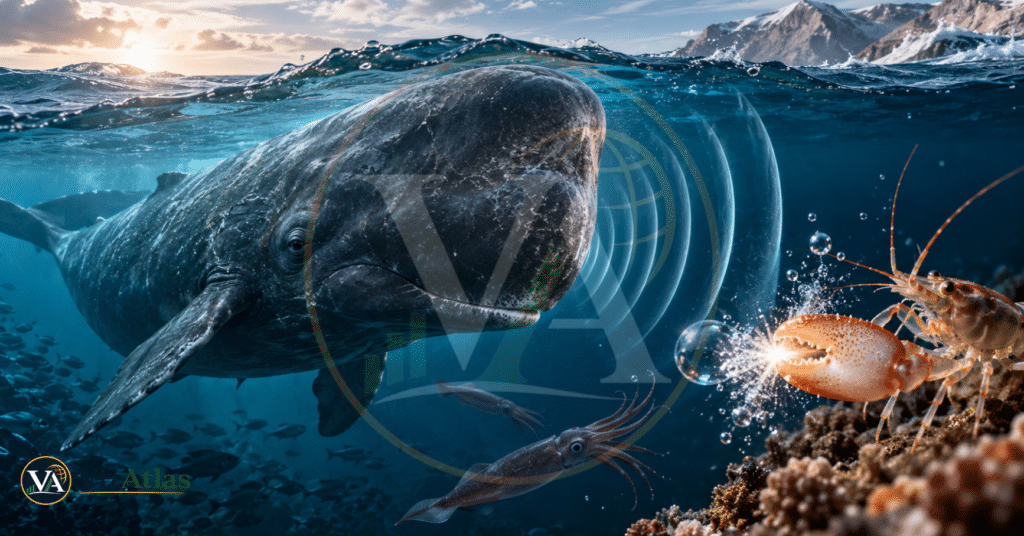
The sperm whale is considered one of the loudest animals on the planet. The sperm whale emits clicks when searching for prey in the depths of the ocean. Certain recorded clicks emit source levels of 236 decibels or greater, depending on the measurement method.
Then there is the pistol shrimp, a tiny marine creature, with a special claw that when snapped together creates a loud bang. The pistol shrimp is so loud that it can stun prey and adds to the dinner.
So how do you go about comparing the sounds made by animals of various sizes who live in different habitats? And Why do animals make these amazing noises in the first place?
What Is the Loudest Animal on Earth, and How Loud Is Its Sound?
| No. | Animal | Highest reported sound level | Sound type | Main purpose |
|---|---|---|---|---|
| 1 | Sperm whale | 236–239 dB underwater | Powerful clicks | Echolocation and communication |
| 2 | Fin whale | 203 dB underwater | Low-frequency calls | Communication |
| 3 | Blue whale | Varies by call type and measurement; some reports approach 188 dB underwater | Low-frequency calls | Long-distance communication |
| 4 | Pistol shrimp | Approximately 183 dB underwater in a published study | Explosive snap | Hunting and defence |
| 5 | Black drum fish | Approximately 183 dB underwater | Grunts and calls | Reproductive communication |
| 6 | African elephant | Approximately 120 dB in air | Rumbles and vocalisations | Communication and social coordination |
| 7 | Lion | Approximately 117 dB in air | Roar | Territorial and social communication |
| 8 | Grey wolf | Approximately 117 dB in air | Howl | Communication and group coordination |
| 9 | White-handed gibbon | Approximately 116 dB in air | Loud calls and songs | Territorial and social communication |
| 10 | Big brown bat | Approximately 121 dB in air | Ultrasonic echolocation calls | Navigation and prey detection |
A Giant with an Extraordinary Sound System
The sperm whale (Physeter macrocephalus), is an interesting whale. It is known for its head, its strong diving skills and its sound system.
The sperm whale makes a sound: a series of short loud clicks, not songs like many other whales. These clicks help the sperm whale “see” and hunt in the deep ocean.
How loud is a sperm whale?
Sperm whale clicks have been measured at 236 decibels in water. Some scientists have found higher peaks under certain conditions.
This point needs explanation. In water decibels use a baseline pressure than the decibels used for air. Therefore a reading of 236 decibels in water does not equal 236 decibels in air. They are not measuring the sound pressure.
Scientists also separate the level that a recording system records from the actual source level of an animal. Source levels are usually referenced to a specific distance often one meter.
This is why when comparing numbers for the animals, different scientific sources give different results.
How does a sperm whale produce such powerful clicks?
That’s because of its nose. Sperm whales have a vocalization system located at the front of the head. Air moved past “phonic lips” creates pulses. Nearby tissues help to focus the sound into a beam.
This lets the whale make all the click noises without using their vocal cords as humans do to speak.
Within the head of the animal are sorts of tissues especially the spermaceti organ, that are very important when it comes to making sounds and transmitting them. This gives rise to a complex biological instrument that produces some of the loudest sounds ever recorded underwater from any animal on the planet.
Why does it make such loud sounds?
The loud clicking sound that the sperm whale makes is mainly used for echolocation.
This clicking happens when the whale is moving through water. Some of the waves bounce back when they hit something and these are picked up as echoes. Studying the echoes helps the whale to find objects, figure out where they are and how far away they are.
This is especially useful when the whale is hunting for squid and other food in areas where there is no sunlight.
Along with the clicking sounds sperm whales make “codas” which are patterns of clicks that play a big role in their social life.
So the same whale can use sound for exploring and understanding the world around it, for talking to other whales.
Subscribe to our $1 newsletter to get new Data and Maps from around the world on various different topics every month. Click here now to join.
A Tiny Animal with an Explosive Snap
If the huge sperm whale shows how the big and amazing body can give us this sound, the tiny pistol shrimp shows that it’s not just the big one that can do it.
Pistol shrimp, also known as snapping shrimp are marine crustaceans that live in many underwater places, such as rocky and coral reef areas.
Several species have a claw that they hit to make the well-known snapping noise.
How does the pistol shrimp make its sound?
The process is really smart.
Every time the shrimp shuts its special claw really fast it makes a bubble that bursts right away which creates a stream of water known as cavitation. That breaking bubble makes a sudden noise. Sometimes it can also create a bit of light because of the cavitation.
The noise from the shrimp isn’t from the two hard parts hitting each other. It’s also from the water moving and the bubble breaking.
How loud is a pistol shrimp?
The sound levels of snapping shrimp are reported between 183 and 210 decibels under water depending on the species and measurement conditions.
Even though these values may appear similar to some data for whales this comparison should be viewed with caution. The sound pressure level is dependent on measurement method, reference pressure, distance and whether it is peak pressure or another acoustic measure.
Pistol shrimp are one of the loudest sounds in the ocean but so far one of the biological sounds with the highest source levels have been sperm whale clicks.
Why does a shrimp need such a loud snap?
Its snap is useful for hunting and defending.
The screeching and sudden pressure changes can confuse small prey nearby for a short time. The same claws can also be used when standing up to animals.
A group of snapping shrimp in one area can create a crackling sound that spreads across the region. In fact, this special natural sound has become so common that scientists can track what’s happening under the water by listening to the snapping shrimp.
Why Underwater Decibels Can Be Misleading
One source of confusion in the debate about the loudest animal is that sound moves differently in water than it does in air.
Decibels are a measure of how loud a sound is. The decibel scale is not a line where each step adds a fixed percentage of sound pressure.
More importantly, underwater sound levels are usually measured from 1 micropascal while airborne sound levels are usually measured from 20 micropascals.
This difference in reference pressure causes about a 26‑decibel shift when comparing the equivalent sound pressures. In addition, the physical properties of water and air affect how sound travels.
Therefore it is misleading to compare an loudest animal’s decibel number directly with the sound level of a lion’s roar or a human scream.
Scientists must be able to distinguish between: a peak level, a root‑mean‑square (RMS) level and a peak‑to‑peak level.
Other Animals Known for Powerful Sounds
Sperm whales and pistol shrimp are not the only creatures that can create loud noises.
Fin whales
Fin whales make loud low‑frequency sounds that can travel across distances in the ocean. These sounds are used for communication and to keep in touch with each other. They differ from the echolocation clicks of sperm whales.
Black drum fish
Black drum fish are fish that emit sounds as part of their social and reproductive behavior. Their sounds are less powerful than the loudest sperm whale clicks measured so far. Still it shows that fish can also make loud sounds.
Elephants
Elephants make range of calls and some of the lower‑pitched calls can be heard at great distances. Many of these calls are lower than the frequency of human hearing. Such sounds are used by elephants to share information and stay in touch with each other.
Lions
One of the famous loud sounds on land is a lion’s roar and it can send messages of territory, position and social availability. To compare a lion’s roar to a whales underwater clicks, we need a different way of measuring the noise. Sure a lion is pretty powerful in air. It is not as loud in biological source levels as a sperm whale is underwater.
Conclusion: Who Is the Loudest Animal on Earth?
The sperm whale is generally thought to be the contender for the loudest animal on Earth when we talk about the source levels of its powerful underwater clicks. Some scientific data have measured values even up to about 236 decibels, according to some measurement conventions. The sperm whale’s clicks are so intense that scientists are still amazed by the numbers.
One of the ocean’s remarkable sound-makers is the pistol shrimp. The pistol shrimp has a claw that opens rapidly and snaps triggering the formation of a collapsing bubble that produces a loud pop. The pistol shrimp’s tiny claw can create a sound that’s surprisingly loud for such a small creature.
These two animals prove that loudness does not necessarily have to be related to body size. Loudness is a factor of anatomy, physics, environment and what the animal has to use it for. Loudness can come from different sources, not just from big bodies.
The next time you wonder what the loudest sounds in nature might be, consider that the more remarkable of them are not made by the roars of land‑based beasts but by a whale darkening the depths of the ocean – and by a tiny shrimp you could hold in your palm.
Subscribe to our $1 newsletter to get new Data and Maps from around the world on various different topics every month. Click here now to join.
Frequently Asked Questions (FAQs)
- Which animal is the loudest?
The sperm whale is known as the loudest animal when it comes to the loudest sounds made by living things. The loudest sounds that sperm whales make are called echolocation clicks. They measure around 236 decibels. This measurement is done using underwater methods.
- Is the pistol shrimp louder than the sperm whale?
No, The pistol shrimp makes a snap. The sound from the pistol shrimp is different for each species. The levels depend on how it is measured. The sperm whale has the highest recorded sound level in scientific reports. The numbers need to be compared because the way the sound is measured is different.
- How does a sperm whale make such a sound?
Sperm whales make loud sounds in their nose area. They have air sacs in their nose that create and send out sound waves. These sounds help the sperm whales find their food.
- Can a sperm whales clicks travel distances?
Yes, Sperm whale sounds can go travel far but it depends on the underwater environment. The distance the sound travels depends on the frequency of the sound, the ocean conditions and how much noise is around the type of click.
- Why does the pistol shrimp snap?
The pistol shrimp closes its claw very fast. This action creates a jet of water and a bubble. When the bubble pops it makes a snapping sound. This sound helps the shrimp catch food and protect itself.
- Can underwater decibel levels be compared directly with sounds in air?
No, The way sound is measured in water is different from the way it is measured in air. The pressure levels used for comparison are different. Also sound moves at different speeds in water and air. So, Comparing decibel levels, from water and air can be confusing.