Why Does No Country Own Antarctica? The Antarctic Treaty, Territorial Claims & History Explained (2026)
Antarctica looks like a country on no map because legally, it is something stranger.
There are flags flying there. There are research stations. There are governments that maintain claims. Scientists from dozens of countries work on the continent. Ships and aircraft operate under authority. Countries even maintain pieces of history, infrastructure and administrative systems.
Antarctica is not part of any single country.
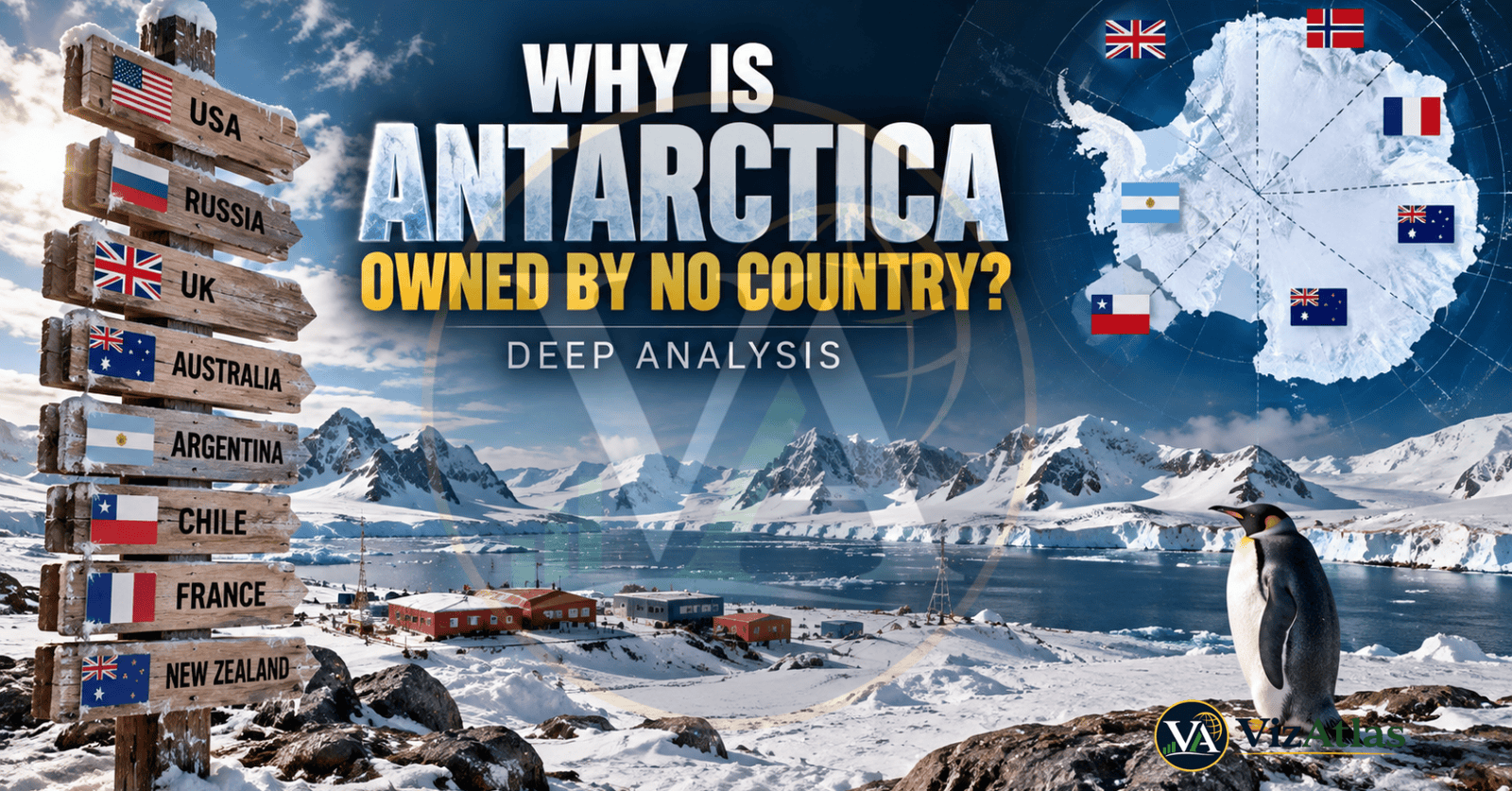
The popular explanation is that “no country owns Antarctica.” That is useful but It is not quite accurate one. Seven countries have formally asserted claims over parts of the continent and several of those claims overlap. The United States and Russia have also maintained what the Antarctic Treaty describes as a “basis of claim” while not recognizing the claims of other states.
So why has Antarctica never become another Greenland, Australia or Iceland?
The answer lies in one of the unusual international agreements ever negotiated: the Antarctic Treaty signed in Washington on 1 December 1959 and entering into force in 1961.
Instead of deciding who owned Antarctica, the treaty essentially created a system in which the most dangerous sovereignty question was placed on hold. That compromise has survived for more than six decades now.
It has transformed Antarctica from a potential arena for territorial rivalry into a continent, governed primarily around peace, scientific research and environmental protection.
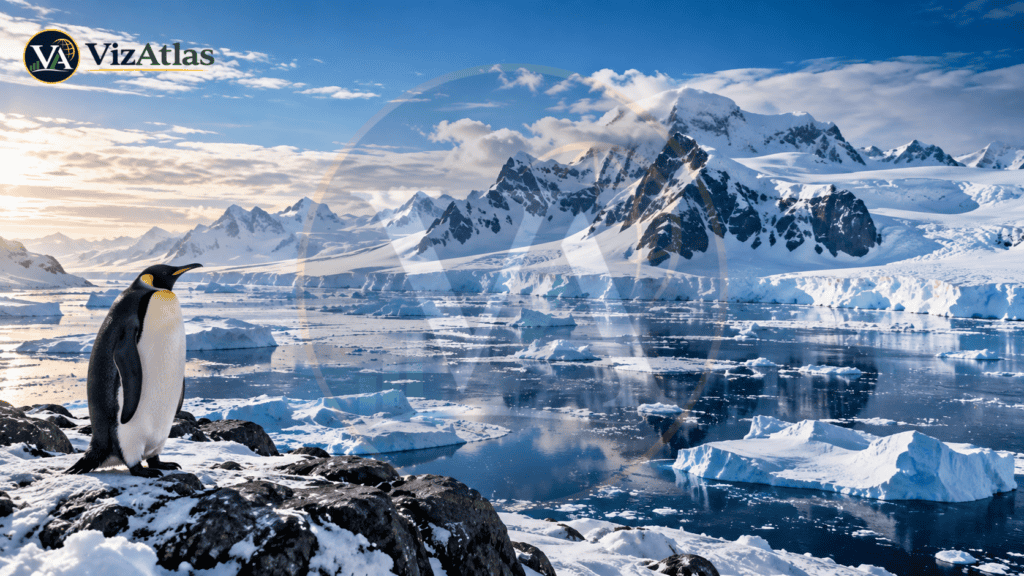
Antarctica Was Not Always a Peaceful International Laboratory
Before the Antarctic Treaty, sovereignty in Antarctica was an international problem.
By the end of 20th century, several countries had asserted territorial claims. Argentina, Australia, Chile, France, New Zealand, Norway and the United Kingdom eventually became the seven states with claims recognized within the Antarctic Treaty system. Some claims overlap— dramatically around the Antarctic Peninsula, where British, Argentine and Chilean claims intersect.
The problem was obvious. If normal territorial sovereignty rules were applied these competing claims could become a recipe for conflict. Antarctica was also becoming strategically and scientifically important.
Then came the Cold War.
The United States and Soviet Union were competing globally while Antarctica offered an environment where military, scientific and territorial interests could potentially collide. The Antarctic Treaty system itself describes the 1950s as a period in which sovereignty and Cold War rivalry created real concerns about conflict.
But then Something unexpected happened. Science created an opening, for diplomacy.
The International Geophysical Year Changed Everything
The immediate background to the Antarctic Treaty was the International Geophysical Year (IGY) of 1957–58.
Scientists from countries undertook an unprecedented coordinated program of research around the world. Antarctica received attention because of its importance to weather, the atmosphere and the oceans.
Research stations multiplied. Scientists exchanged information.
Countries that were competitors cooperated in the name of scientific discovery.
The experience demonstrated that Antarctica could function as a place where countries worked together when their wider political relationships were deeply antagonistic.
The United States subsequently proposed that the countries active in research negotiate a treaty, setting the continent aside for peaceful purposes and scientific cooperation.
Twelve countries eventually signed the treaty, in Washington in 1959. The agreement did something unusual.
It did not solve the sovereignty dispute. It made the dispute manageable.
Article IV Is the Legal Masterpiece
The one part of the Antarctic Treaty that explains why Antarctica has no owner, that part is Article IV.
Article IV wording is deliberately cautious. The treaty states that nothing in the treaty should be read as a renunciation by a claimant of asserted rights or claims to territorial sovereignty. The treaty also protects any existing basis of claim. Stops the treaty from favoring whether states recognize or reject another states claim.
Then comes the crucial provision of the treaty.
While the treaty remains in force, activities in Antarctica cannot create rights of sovereignty, cannot support or deny an existing claim and no new claim or enlargement of an existing claim may be asserted.
This has created what is often described as a freeze, on territorial claims. The term “freeze” needs to be understood properly. The freeze does not mean that the claims disappeared. The freeze means that the treaty stops countries from using activities carried out under the treaty to strengthen or create sovereignty claims.
Imagine several people arguing over ownership of a piece of land. Of deciding who owns it, they agree:
“You may keep your existing position but nobody gets to expand their claim and nobody’s current activity will change the legal situation.”
That is roughly what happened in Antarctica.
Why Didn’t the Treaty Simply Give Antarctica to Everyone?
Because that would have been politically impossible. The claimant states were not prepared to surrender positions. Countries that did not recognize those claims were not prepared to accept those claims.
The United States and Soviet Union also had their strategic positions. A treaty that required everyone to agree on ownership would probably have failed.
The genius of the 1959 arrangement was to separate sovereignty, from governance. Countries could disagree about who owned what while agreeing about how Antarctica would actually be used.
That distinction allowed the system to function. It still does.
Antarctica Is Governed, Just not like an Ordinary Country
Saying Antarctica is “unowned” can lead to another misunderstanding. Antarctica is not a continent. It has an international governance framework.
The Antarctic Treaty was signed in 1959. It became the base for a larger Antarctic Treaty System. That system now includes the Environmental Protocol and other agreements that cover topics such, as Marine life, seals and environmental care. The Treaty Secretariat lists 58 Parties.
The system operates through the Antarctic Treaty Consultative Meeting or ATCM.
Consultative Parties meet to share information, talk about interests and make plans that support the treaty’s principles and goals.
At the 2026 ATCM, there are 29 Consultative Parties and 15 Non‑Consultative Parties that take part in the meeting. A country gets status by showing strong scientific research work in Antarctica.
That creates a form of international governance. It is not an Antarctic government. It is a system based on a treaty where countries work together to manage what happens on Antarctica.
Science Is Not Just Allowed in Antarctica—It Is Central to the System
The Antarctic Treaty does more than allow research. It deliberately makes science one of the parts of Antarctic governance.
Article II guarantees freedom of investigation while Article III encourages international cooperation and the sharing of scientific observations and results.
This was not by chance. Scientific cooperation helped make the original treaty possible.
It also became a way to decide which countries would have power in the treaty’s decision-making process.
Countries that join the treaty can get Consultative Party status by showing their interest in Antarctica through real scientific research like building a scientific station or sending scientific teams.
That creates one of the unusual setups in international law. Power within the Antarctic Treaty system is partly based on involvement. The continents management is therefore very connected, to research.
Antarctica Is Demilitarized
The treaty also stops Antarctica from becoming a military battlefield.
Article I says that Antarctica must only be used for Research purposes. It bans any actions such as building bases, making fortifications, doing military exercises or testing weapons. Military people and gear may still help with science or other peaceful tasks.
This difference is important.
Military planes can help move supplies, around Antarctica.
Military people can aid in science work.
Military‑style gear can be used for tasks.
Antarctica cannot simply become another military area. Therefore the treaty does not forbid all people from being there. It only stops military actions.
Nuclear Weapons Were Also Kept Out
The treaty goes a step further. Article V prohibits explosions in Antarctica and the disposal of radioactive waste there.
This was particularly significant in the Cold War environment of the 1950s. The treaty was therefore not about avoiding territorial disputes. It established a principle: Antarctica should not become another arena, for Nuclear Weapons escalation.
What about resources?
This is where Antarcticas legal system becomes especially interesting.
Antarctica is believed to hold natural resources—mineral deposits hidden beneath its ice and deep in its rocky layers.
So why hasn’t large-scale mining become an industry there?
The answer lies in the 1991 Protocol on Environmental Protection to the Antarctic Treaty often called the Madrid Protocol. This agreement took effect in 1998. Officially made Antarctica a “natural reserve, devoted to peace and science.” Article 7 of the Protocol bans any activity involving mineral resources except for research.
This rule stands as one of the legal safeguards, in the entire Antarctic framework. It doesn’t just, Control mining. It outright forbids mining operations.
No permits, no exceptions, no plans. Just a clear and firm ban.
The Famous 2048 Mining Ban Is a Myth
A claim about Antarctica says the mining ban will end in 2048. It does not.
This wrong idea comes from Article 25 of the Environmental Protocol.
The Protocol started in 1998. After 50 years, a Consultative Party may ask for a review conference about how the Protocol works. That does not mean the Protocol will end by itself. It does not.
The Antarctic Treaty Secretariat says clearly that the Antarctic Treaty and the Environmental Protocol have no set ending date.
Importantly the mining ban cannot just vanish, when a review conference is called. Any change that involves mining minerals would need a legal system that meets the Protocols rules.
The Secretariat has said times that the 2048 expiry idea is wrong. So 2048 is a date that shows a review could happen—not a set end, to protecting the Antarctic environment.
Antarctica Is Not “International Property”
Many people think that Antarctica is owned by the world. That idea is too simple. Antarctica does not have a government.
The United Nations does not run Antarctica like a territory. The Antarctic Treaty does not say that all countries own Antarctica together.
Instead the treaty sets up an international legal system that applies to the Antarctic Treaty area. The treaty covers everything of 60 degrees South even ice shelves and keeps the rights of states under international law, about the high seas there.
The outcome is neither national control nor simple international ownership. It is a space governed by a treaty. That is why Antarctica does not fit easily into the labels of world geography.
What Happens to the Territorial Claims?
The territorial claims remain. That is crucial for understanding the world of politics.
The United Kingdom still calls the British Antarctic Territory a claimed territory, for example, while it acknowledges that Argentina and Chile have overlapping claims and that the Antarctic Treaty puts territorial claims in a frozen legal position.
Australia, France, New Zealand, Norway, Chile and Argentina also keep their positions.
Under Article IV activities carried out under the treaty cannot create new sovereignty rights or enlarge existing territorial claims. This creates a situation where a country can keep a territorial claim without exercising the kind of unrestricted sovereign control usually linked to territory.
A claimant can keep a claim. Another country can reject the claim. Both can set up stations. Neither can use those activities to create a legal claim, under the treaty. That is the compromise.
Conclusion: Antarctica Is Not Owned by No One—It Is Governed by an Extraordinary Compromise
Antarctica’s status is often reduced to a sentence: “No country owns Antarctica.”
The reality is more fascinating.
Seven countries have claims on Antarctica. Some of those claims overlap. The United States and Russia keep their positions about potential claims. Other countries, Do not recognize those claims.
Then in 1959 those competing positions were placed inside a legal framework. The Antarctic Treaty did not decide who owned Antarctica. It decided that ownership would not be allowed to dominate Antarctica’s future.
Territorial claims were froze and thus Preventing the claims from expanding. New claims were prohibited. Military activity was restricted. Scientific investigation was protected. Scientific information was encouraged to cross boundaries. Inspection rights provided a degree of transparency.
Then the 1991 Environmental Protocol added another layer designating Antarctica as a reserve devoted to peace and science. It also prohibited mineral-resource activities than scientific research.
Than six decades later the arrangement remains in place. This is what makes Antarctica so unusual.
Antarctica is not a country.
Antarctica is not simply “owned by everyone.”
Antarctica is not lawless.
Antarctica is not completely free of territorial claims.
Instead Antarctica is a continent where countries with competing interests agreed to freeze the question of sovereignty and cooperate on the questions they could actually solve. Perhaps that is the lesson Antarctica offers.
Sometimes international disputes are not solved by deciding who wins. Sometimes they are managed by agreeing that the question itself should not prevent everyone from moving forward.
On the coldest, most remote continent on Earth that remarkably practical compromise has lasted for more, than sixty years.
Subscribe to our $1 newsletter to get new Data and Maps from around the world on various different topics every month. Click here now to joi